How to Clean, Care For, and Maintain Your Area Rug
Learn how to properly clean and care for your area rug with expert guidance from Furnitureland South rug specialist Mary John Minter.

You chose your rug carefully — the pattern, the color, the way it felt underfoot. Keeping it looking its best doesn’t require much, but it does require the right approach. A few simple habits, done consistently, will protect your investment and extend the life of a piece you’ve built your room around.
The good news? Caring for a rug well isn’t complicated. It just requires knowing what you have. Here, our rug specialist Mary John Minter walks through everything you need to know, from the right way to vacuum, to what to do when something spills.
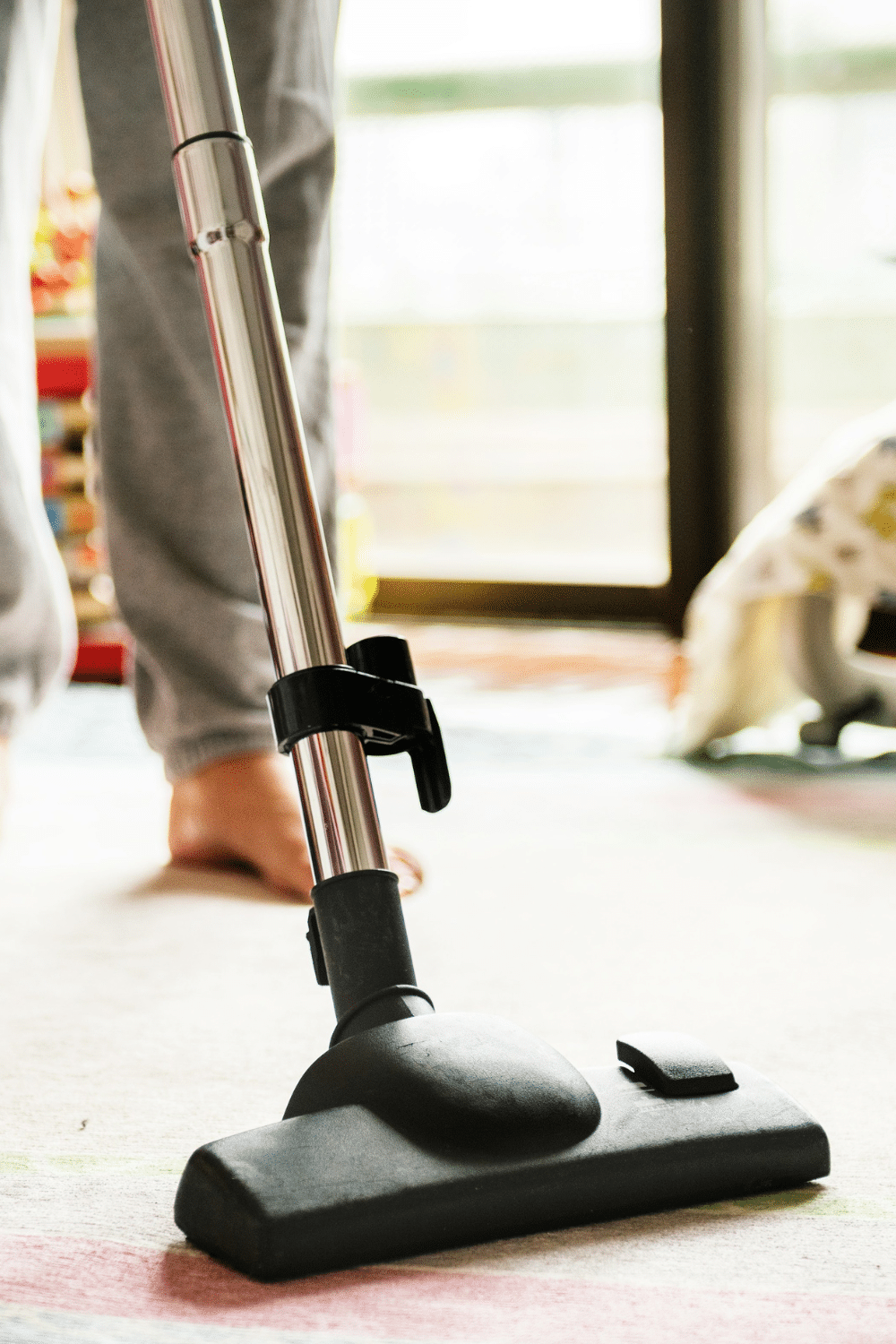
How to Vacuum an Area Rug Correctly
Regular vacuuming is the one of the easiest ways to extend the life of your rug. Dust and grit work their way into fibers over time, and routine suction prevents them from doing lasting damage.
The one rule to commit to: never use a beater bar. That rotating brush, standard on most upright vacuums, is too aggressive for any area rug, regardless of type. The friction can cause fibers to sprout and will gradually wear down the pile. Use suction only, with no agitation. It’s a small adjustment with a significant impact on longevity.
Tip:
If your vacuum has a “hard floor” or “bare floor” setting, that’s typically your best option for area rugs as it disengages the beater bar and relies on suction alone.
How to Clean an Area Rug: By Rug Type
The first response to any spill is always the same: blot, don’t scrub. Scrubbing pushes the stain deeper into the fibers. A clean cloth applied with gentle pressure is your best tool. What comes next depends on the type of rug you have.
Hand-Tufted Rugs
Blot immediately with a towel and avoid saturating the rug with water. The canvas backing on a hand-tufted rugs is glued and sensitive to moisture, which can cause it to separate. For surface spots, a damp toothbrush used very gently works well. Dry cleaning is the preferred method for anything beyond minor spot treatment.
Machine-Made Rugs
Machine-made rugs are the most forgiving to clean. A mild soapy water solution, applied with a toothbrush and worked gently through the stain, handles most spills beautifully. Follow with a rinse of clean water to remove any soap residue. Always check the tag on the back for any specific cleaning instructions from the manufacturer.
Hand-Knotted Rugs
The tight construction of a hand-knotted rug gives you a little more time to respond to a spill. Blot with a clean cloth, then apply a gentle solution of dish soap and water sparingly. The key word is sparingly as too much liquid can spread the stain rather than lift it. Hand-knotted rugs benefit from professional washing every few years.
“Think of a hand-knotted rug the way you’d think about a well-made coat or a classic leather bag — it’s an investment designed to last for decades, and with the right care, it will.”
-Mary John Minter, Furnitureland South Rug Expert
Why Every Rug Needs a Quality Pad Underneath It
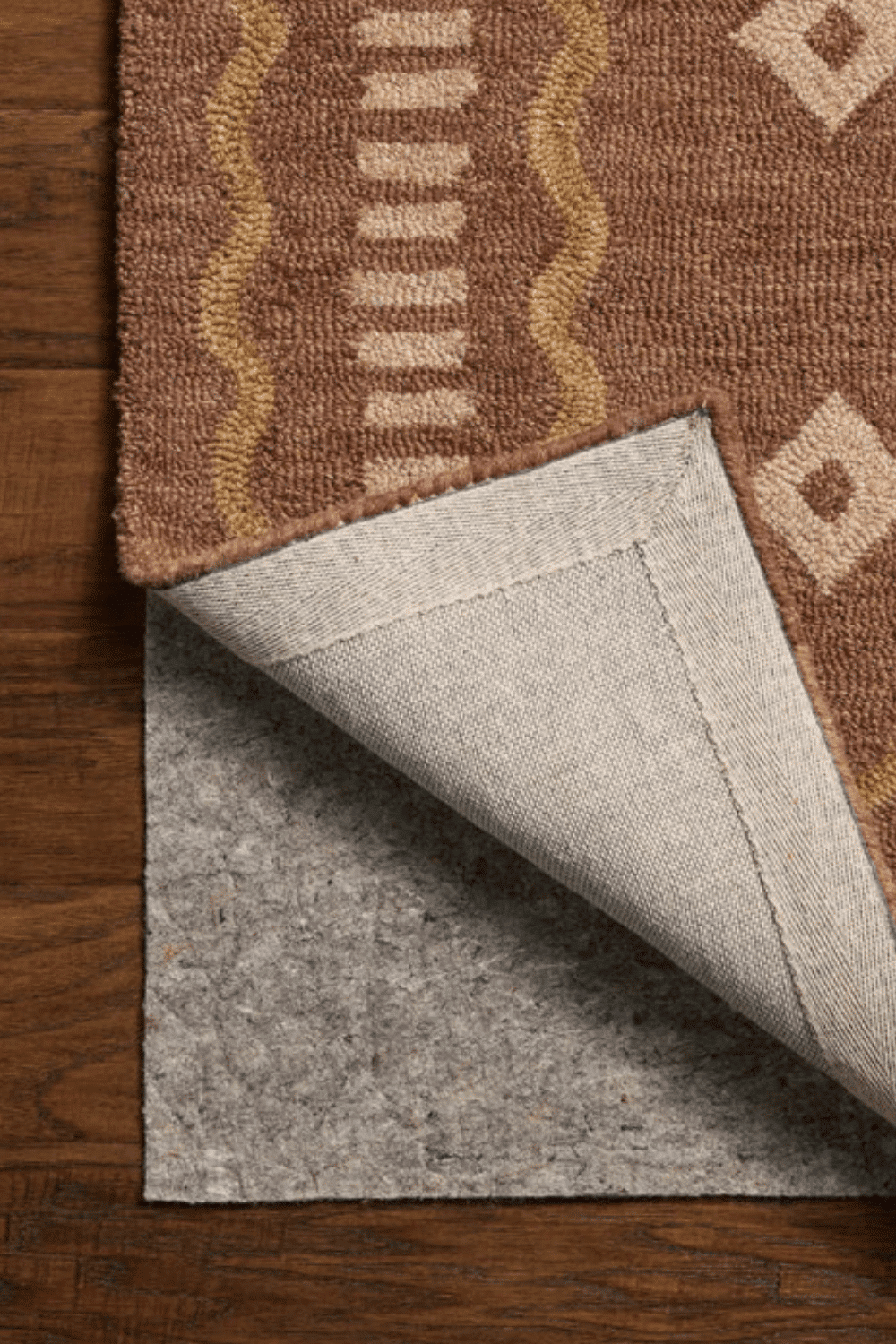
A quality rug pad is something we recommend with every single rug, and it does more than most people expect. The obvious benefit is safety: a good pad prevents slipping and keeps the rug from shifting underfoot. But a pad also creates a cushioned buffer between the rug and the floor, reducing the daily wear that comes from foot traffic and grit. It makes the rug easier to clean, extends its life, and simply feels better underfoot.
The pad we carry at Furnitureland South is made from compressed recycled material on one side and latex on the other. We recommend leaving about an inch or two of clearance around the rug’s edge so it waterfalls slightly rather than sitting flush. We hand-cut pads to size in-store. And uniquely, the pad we carry is one of the few that works safely on heated floors.
One Thing to Avoid:
Waffle-weave pads may seem like a reasonable choice, but they can deteriorate over time and cause damage to your floor. A quality compressed-rubber pad is always the better investment.
What to Do About Rug Sprouts
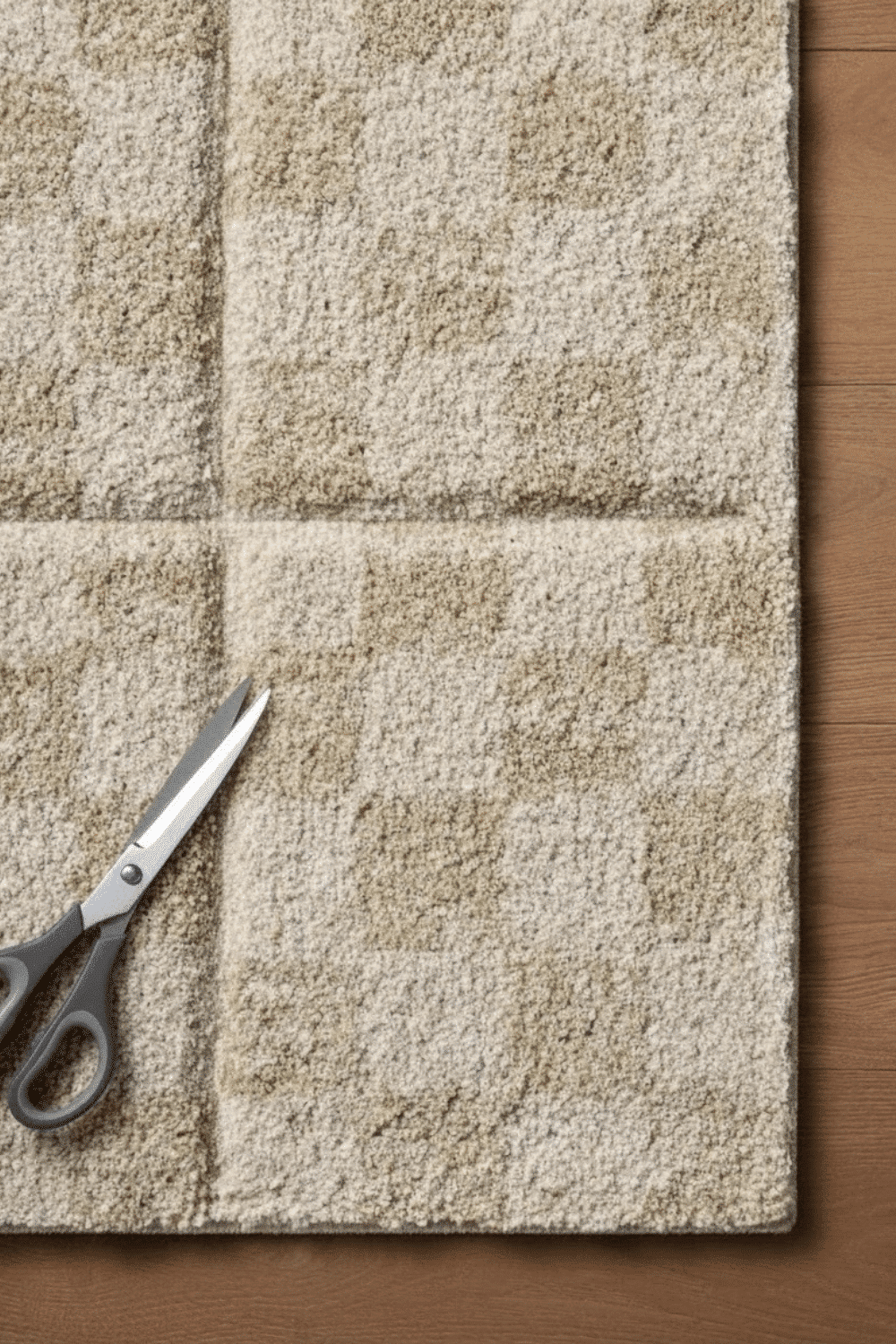
If you notice small loops or bits of fiber working their way up through the surface of a wool rug, don’t panic and don’t pull them. These are called sprouts: small pieces of wool that weren’t fully trimmed during the finishing process. They’re common, they’re harmless, and they’re easily addressed with a small pair of scissors. Simply trim them flush with the pile. Pulling will cause more damage.
The Most Important Rule: Know What You Have
The foundation of caring for any rug begins with understanding its construction and materials.A machine-made polypropylene rug can handle water extraction cleaning with ease. A hand-tufted piece cannot. A hand-knotted rug benefits from professional washing every few years and will reward that care with decades of beauty.
When in doubt, our team is always happy to point you in the right direction. That’s exactly what we’re here for.
Frequently Asked Questions
For most households, vacuuming once a week is a good baseline. In high-traffic areas or homes with pets, two to three times per week is ideal. The key is consistency as regular light vacuuming prevents grit from working its way deep into the fibers, which is far more damaging than the occasional missed week.
It depends on the rug type. Machine-made rugs generally tolerate steam or water extraction cleaning well. Hand-tufted rugs should never be steam cleaned as the heat and moisture can break down the glue-adhered canvas backing. Hand-knotted rugs are best cleaned professionally. When in doubt, always check the care tag or ask a specialist before attempting any wet cleaning method.
Performance rugs made from synthetic fibers such as polypropylene, polyester, or PET, are generally the most practical choice for busy households. They clean easily, hold up to traffic, and are widely available. Indoor/outdoor rugs fall into this category as well. That said, hand-knotted wool rugs are also remarkably durable and naturally stain-resistant. However, they require more intentional care when cleaning is needed.
Yes, and not just for safety. A quality pad extends the life of your rug by reducing friction with the floor beneath it, provides cushioning that makes the rug more comfortable underfoot, and creates a barrier that makes cleaning easier by stopping dirt from embedding itself into the underside of the rug. We recommend a pad with every rug we sell, and we’re happy to hand-cut one to the right size in our store.
These terms are sometimes used interchangeably, but they describe very different construction methods, and very different levels of durability. A hand-knotted rug is made by tying individual knots of yarn onto a foundation, a painstaking process that produces an extraordinarily durable piece. You can see the pattern reflected on the underside. A hand-tufted rug is made by pushing yarn through a canvas backing with a tool, then sealing it with a layer of glue and cloth. It has a plush feel and beautiful appearance, but it requires more delicate care and is not designed for the same lifespan as a hand-knotted piece.
Large rugs, even if they physically fit in a front-loader, can become very heavy when wet and may damage the machine’s motor during the spin cycle. Traditional hand-tufted, hand-knotted, or woven rugs should never be machine washed.
A good rule of thumb is professional cleaning every one to two years for rugs in regular use, and every three to five years for pieces in lower-traffic areas. Beyond the calendar, trust your senses: if the rug looks dull, feels flat, or retains an odor after spot cleaning, it’s time for a professional wash. Hand-knotted rugs in particular benefit from professional care, and it’s the best way to preserve their construction and appearance over the long term.



 Your Privacy Choices