Leather Education
From Necessity to Luxury
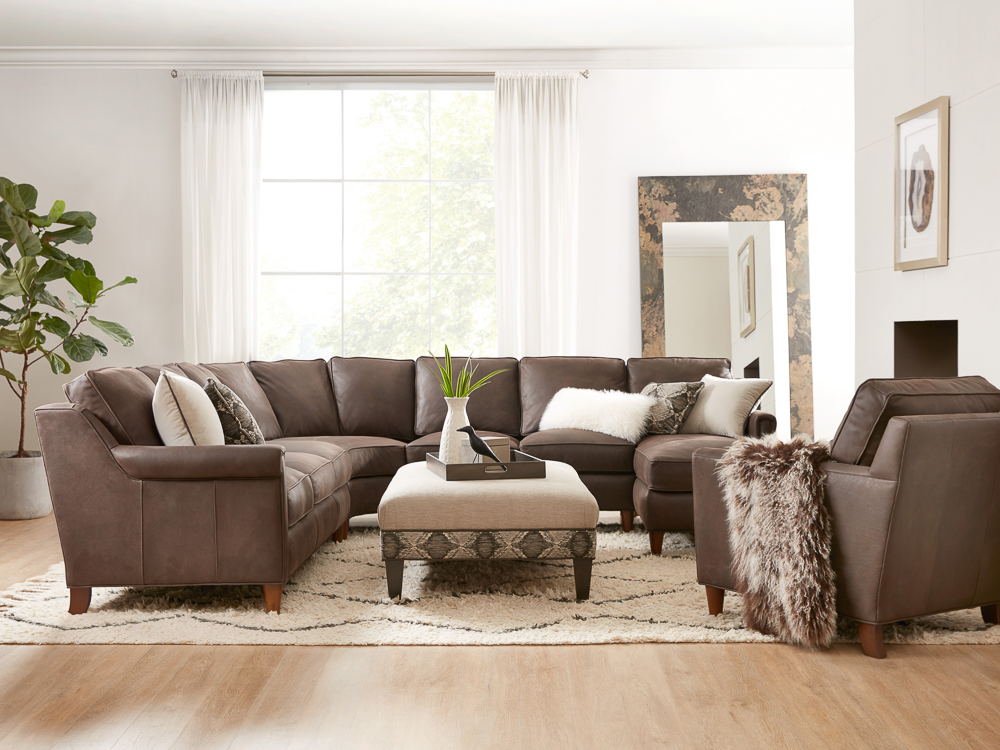
The Original Performance Material
In the furniture industry, we talk a lot about our love for performance fabrics. Today, we’re rolling back the clock to talk about the original performance material — leather. Before leather was a luxury material, it was essential to mankind’s survival.
If you had leather hides, then you had shelter from the storm and a roof over your head. It served as quality protective clothing from the elements that was flexible enough for mobility. Our ability to hunt and gather was aided by rudimentary footwear made of leather hides that enabled us to be more agile. And as time went on, when we had to protect ourselves from enemies, the armor and headwear we were armed with were made of leather.
Think about it. When you visit a museum of natural history, you see leather everywhere you go. It’s a part of mankind’s long told story and a major catalyst of human progress.
During the Industrial Revolution, many belts that were used to run machines were not rubber or synthetic, they were leather because of its strength. Over time, its durability, breathability and softness became a luxury material. It’s comfortable, durable and long-lasting. It doesn’t wear out, it wears in and becomes increasingly more beautiful with age.
And today, in the age of sustainability, leather is an amazing sustainable solution. Without the leather industry, hides would be considered a disposable and potentially toxic byproduct of beef production. It’s an amazing story to be able to make something useful and gorgeous from waste that would otherwise still be produced.
Find your personal Design Consultant and shop our Leather Gallery at Furnitureland South today!
“I entertain a lot, and I’m afraid leather will get scratched up by the trivets on my guests’ jeans,” you say. You think leather isn’t an option for you because you say, “I have dogs and a cat. I’m worried their claws will scratch or puncture the leather.” Our Design Consultants are here to help you get the leather you want while avoiding any perceived setbacks.
Leather, a sturdy and durable material, goes through an extensive process before it’s stretched onto furniture to fill your home. And its makers have very specific intentions for the many different types of leathers. For example, pure aniline leather was never made to withstand the everyday wear and tear that comes with pet ownership. It was, however, made to bring style and comfort to a rustic restoration vintage style loft or home.
Check out our leather guide to find out which leather fits your lifestyle:

Pure Aniline leather is the most natural leather, made of the best luxurious to the touch hides. It’s aniline dyed, but there’s no protective coating to deter scratches and natural markings are visible. As a natural leather, it is sensitive to liquids; however, it can be spot cleaned with a damp white cloth.
Aniline Plus leather has a natural aesthetic and is made with the best luxurious to the touch hides. It’s aniline dyed and coated with clear natural waxes and oils to offer a basic layer of protection. As a natural leather, it can scratch and is sensitive to liquids; however, it can be cleaned with a mild soap and water solution and conditioned.
Semi-Aniline leather appears somewhat natural and is aniline dyed. Natural markings may be visible, but overall, this type of leather has a more uniform color. A more natural protective or translucent coat protects the leather so that it should not scratch. It can be easily cleaned with a mild soap and water solution.
Pigmented leather is the least natural of the five types of leather, but it’s the easiest to clean and the least receptive to scratches because of its protective coating. It is aniline dyed and has a uniform color. It can be cleaned with a mild cleaner.
Nubuck/Suede leather is a natural, aniline dyed leather that reveals tracking (touch) patterns, while some markings are visible. Clean hides are typically used for this type of leather with no protective coating. Liquids should be avoided when cleaning; however, vacuums or brushes may be used.
Speak with one of our expert Design Consultants to find the perfect leather for your home today!



 Your Privacy Choices